One of Wun
After everything I wrote last post, you might need a record that doesn't apologise for itself.
Not that I am the best source, but One of Wun by Gunna is a staple in my playlist. It came out in 2024, and I came to it late — most of the discourse had already moved on by the time I sat with it properly. Which, in hindsight, was the right way to find it. The album is a long, calm flex, and the noise around it had finally quieted enough for me to hear what it was actually doing.
I want to talk about why I keep coming back to it.
The context (briefly)
If you don't follow rap, here's the short version: in 2022, Gunna was arrested in a sprawling RICO case alongside members of YSL. He took a plea deal and was released. The plea was misread by a lot of people — online people, mostly — as cooperation, as betrayal. The word snitch attached itself to him in a way that didn't really come off, no matter how many times the actual court documents were posted.
He went away. He came back with A Gift & a Curse in 2023, which was more bruised, more introspective. And then he came back again, less bruised, with One of Wun in 2024.
By the time of One of Wun, the industry around him hadn't fully thawed. Features were thinner. Peers were quieter. The internet was still waiting for him to fall.
He did not fall.
What the album sounds like
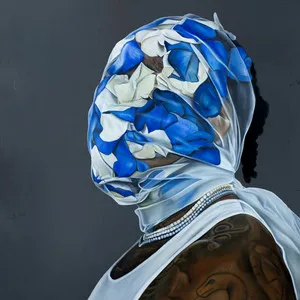
On the surface: trap. Glossy production, melodic hooks, the usual taxonomy of cars and watches and women. If you skim it, you'll hear a Gunna record — pretty, expensive, smooth.
But the album is doing something underneath the gloss, and once you hear it, you can't un-hear it.
One of Wun is the sound of a man rebuilding his identity in real time. Quietly. Without ever raising his voice.
The thing about defiance
Most comeback music is loud. The artist screams about their critics, names names, dares the world to keep doubting them. There's catharsis in it, but it also reveals how much the doubt got under the skin.
Gunna doesn't do that.
His defiance is compressed. It's in the repetition of the phrase one of one — stylised as one of wun — until the phrase stops being a brag and becomes a kind of mantra. A thing you say to yourself when the room goes quiet. I am one of one. I am one of one. I am one of one.
You can't be cancelled if you've decided you're singular. You can't be replaced if there's no category you fit into. The phrase is a shield, but it's also a small act of self-rescue.
"They want me to lose… but I'm due for a win."
It's not a threat. It's an observation, delivered flatly, almost gently. Which is somehow more powerful than a scream.
What the flexing is actually doing
I used to find flex rap boring. The hundredth song about a watch, the thousandth about a car — what is there to say.
But the flexing on One of Wun isn't celebration. It's evidence.
When the world tells you that you've fallen, the most economical response is to show, repeatedly, that you have not. The money isn't the point. The money is the receipt. Every time he names a number, he's saying: the thing you thought happened to me did not happen to me.
There's a kid in there too. Gunna has talked about hiding money as a child, growing up in a way that did not predict any of this. The cars and the watches mean something different when you understand they're being held up by a person who, twenty years ago, wasn't sure he'd ever see the inside of a building like the ones he's now in.
The flex, in that light, is just survival with a price tag attached.
The loneliness inside it
This is the part that gets me.
For all the confidence, One of Wun is a quietly lonely record. Fewer features than his earlier work. More tracks where it's just him and the beat and the slow assertion that he's fine. Critics noted it at the time — isolated, exposed, alone in the room.
You hear it most in the spaces between bars. In the way certain hooks repeat one too many times. In the calm of his delivery, which on a different album would read as cool, but on this one reads as a man who has gotten used to being the only person in the room who still believes in him.
It's the sound of someone who learned, the hard way, that some rooms empty out when you need them most — and decided to keep rapping anyway.
Why I keep coming back to it
I think it's because One of Wun is doing something I recognise.
It's not the loud kind of recovery. It's not Hamilton sobbing in the Ferrari. It's the other kind — the kind where you don't cry, because you don't have the luxury of crying yet, because you're still in the middle of proving you didn't break.
It's the music of someone who has been doubted, who knows they have been doubted, and who has decided that the response is not to argue but to keep going. To get up. To make the song. To put it out. To get up again tomorrow.
For a record about being one of one, it's strangely full of company. Anyone who has had to rebuild themselves in public — or even just rebuild themselves at all — will hear themselves in it.
Tracks to start with
If you're new to the album, three entry points:
- "collage" — the clearest statement of the album's thesis. Listen to the hook. The way one of one lands.
- "conscience" — the most introspective moment. The mask slips a little. You hear the actual weight he's carrying.
- "prada dem" — pure surface, pure flex, pure energy. The opposite of "conscience," and that's the point. The album is both at once.
Start there. If those land, the rest of the record opens up.
One last thought
There's a kind of music made by people who have something to prove, and a kind made by people who have stopped needing to prove anything. One of Wun is the rare record that sounds like both at the same time. He's still answering his critics. He's also, somehow, past them.
That's a hard frequency to hit. Most artists pick one. Gunna, on this album, refuses to.
One of one, indeed.