Remembering who you are
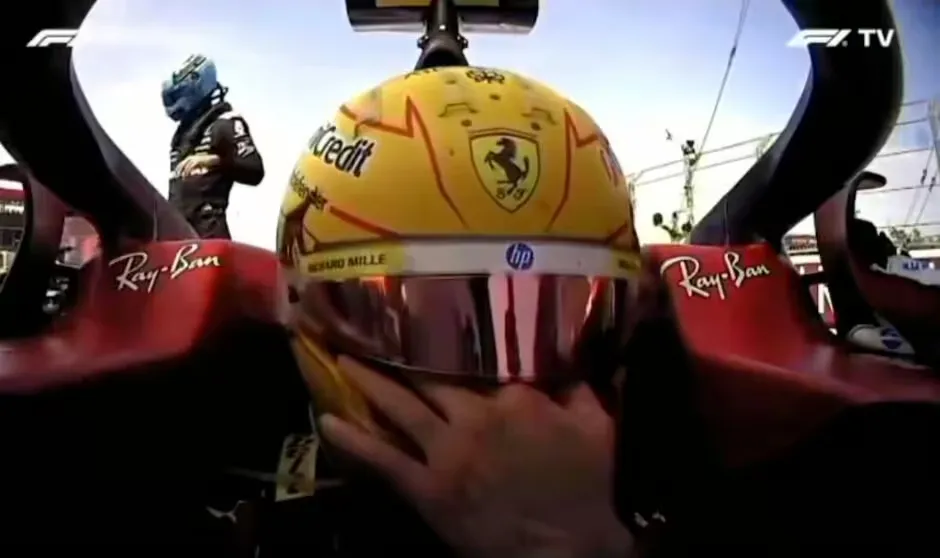
Lewis Hamilton cried in a Ferrari last weekend.
Forty-one years old, two years without a win, the boldest career move in Formula 1 history looking like a long, slow mistake. People had started using the word decline about him. Past it. Faded. And then, on a Sunday in Spain, everything aligned — a strategy call, a safety car, the kind of clean drive he used to do in his sleep — and he won by nineteen seconds. He climbed out of the car and could not speak.
I watched the clip seven times. I rewatched the race — the conversations with his engineer, the way his voice cracked as he crossed the chequered flag. I think I was looking for something.
The kid who achieved things
I was the kid who achieved things. Top of the class. Awards at assembly. Trophies my mother kept on a shelf I used to dust. I learned early that the way you earn love is to be exceptional, and so I became exceptional, or at least convincing enough that no one looked too closely.
What no one saw was that underneath the achieving was a kid who was already tired. Depression at an age I didn't have the language for. Suicidal thoughts I tucked behind good grades. A confused, anxious relationship with love — both giving and receiving it — that I papered over with another medal, another report card, another reason for my parents to say we are so proud of you.
I got into the best university in Africa. I joined the rugby team. I enrolled in Actuarial Science because Actuarial Science is what kids like me were supposed to do. The script was perfect. I was perfect. I was twenty years old and I was already running on fumes I had been burning since I was twelve.
The collapse
I don't know if it was one thing or a hundred small things stacked on top of each other.
I switched courses because I wasn't doing well, and the shame of that switch lives in me still. I got injured at rugby — the kind of injury that doesn't heal, that ends things — and just like that, a part of my identity I'd been carrying since childhood was gone. The scholarship I'd been counting on didn't come. I worked minimum-wage jobs to keep myself afloat in university, asking my dad — here and there — for an allowance he couldn't afford. I failed a module. I finished my degree later than my peers, and every graduation photo on social media that year felt like a small, polite knife.
The worst part wasn't the failing. The worst part was what failing did to the person I thought I was. Because if I wasn't the kid who achieves things, then who was I? I didn't have an answer. So I stopped looking for one. I receded. I stopped talking to my friends. I became socially awkward in a way I had never been, and have never quite unlearned.
I got a job — a good one, actually. A developer role at one of the Big Four. Quick offer, decent money, the kind of thing that, on paper, looks like a recovery story. He got back up. He's fine. And I let people believe it, because letting people believe it was easier than explaining that something inside me had gone quiet, and I didn't know how to wake it.
I've been trying to remember who I was, before all of it, for a long time now.
What the athletes know
This year I've watched, almost obsessively, a string of athletes break down in public.
Hamilton in the Ferrari, weeping for a dream he'd had since boyhood. Jalen Brunson holding the NBA Finals MVP trophy and trying to speak through tears — his father had played for the Knicks decades earlier, and now the son had finished what the father started, and 53 years of a city's heartbreak collapsed into one sentence he couldn't get out: "I have no words… I don't know what I'm feeling."
Messi, scoring a hat-trick in Argentina's World Cup opener and weeping on the pitch — and then admitting, later, that the tears were not about football at all. They were about something he was carrying privately, that the goal had simply cracked open.
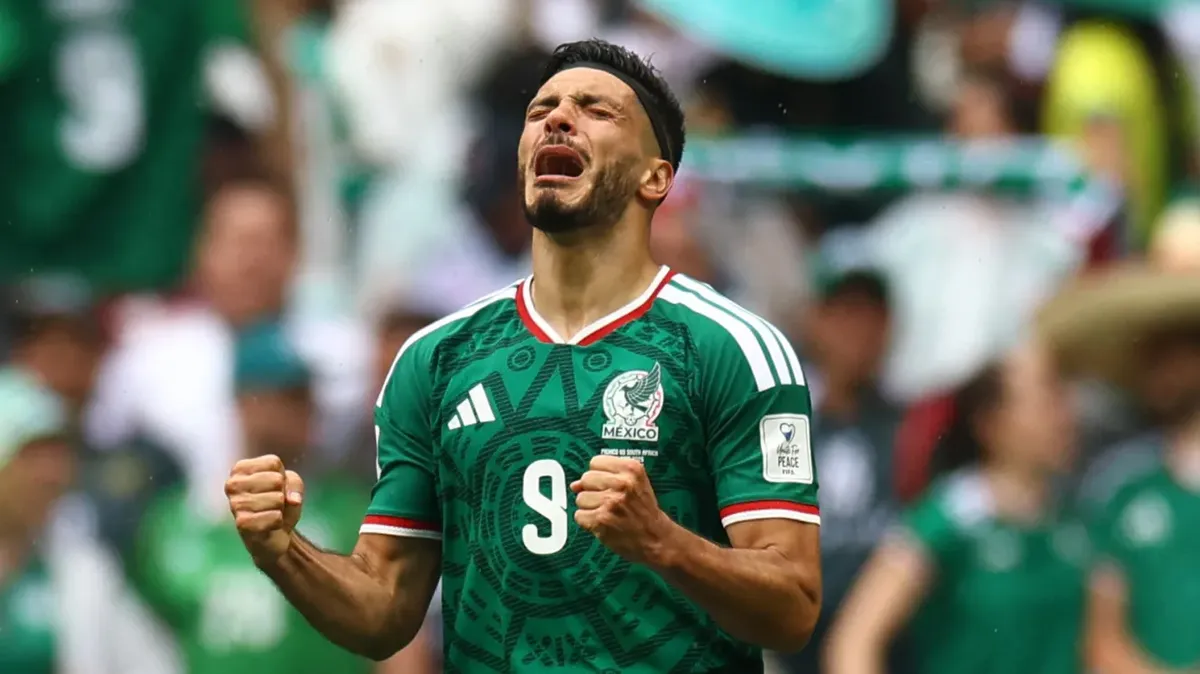
Raúl Jiménez, six years after a skull fracture that should have ended his career, scoring his first World Cup goal weeks after burying his father. Recovery and grief, tangled in the same celebration.
And Alysa Liu, who retired from figure skating at sixteen because she was burned out, walked away completely, and then years later came back — not to prove anything to her critics, but because she had healed enough to want it again. She won Olympic gold for nobody but herself.
I keep returning to these stories because I think they are all telling a version of the same thing, and the thing is this: the people we think of as superhuman are, mostly, people who got tired.
They got injured. They got doubted. They got too old, or too young, or too far from what they used to be. They lost something — a parent, a body, a version of themselves they had been since childhood — and they had to figure out, in the quiet, whether to come back, and what to come back as.
The tears, when they finally won, were not about winning. The tears were about remembering. About the moment when the person they used to be looked at the person they had become and said, there you are. I thought I'd lost you.
Remembering is not returning
I used to think recovery meant going back. Becoming the kid with the medals again. Restoring the version of myself that everyone, including me, had been so impressed with.
I don't think that anymore.
That kid was running on fumes. That kid was achieving so he wouldn't have to feel. That kid had not yet been broken open by failure, by injury, by financial fear, by the long slow grief of watching his peers graduate without him. That kid did not yet know what he was made of, because he had never been tested in a way that mattered.
The version of me I am trying to remember is not the one with the trophies. It is the one underneath. The one who was there before the achieving started. The kid who liked things just because he liked them. Who laughed without checking who was watching. Who hadn't yet learned that love had to be earned by being exceptional.
That kid is still in here somewhere. I am trying to coax him out. It is slow work. Some days he answers. Some days he doesn't.
A small note to anyone who is also remembering
If you were also the kid who achieved things, and then one day stopped — I see you.
If your collapse was loud, or if it was so quiet that no one around you noticed, including you — I see you.
If you are employed and functional and outwardly fine, and inwardly still looking for the version of yourself you knew before the world got heavy — I see you.
You are not behind. You are not less than the timeline you imagined for yourself at nineteen. You are someone who got tired, in a culture that does not allow tired, and you survived it. That is not a small thing. That is, maybe, the only thing.
Hamilton waited two years for that win. Brunson's city waited fifty-three. Liu walked away and came back when she was ready, not when the world told her to.
The remembering is not a race. There is no scholarship for finishing first.
I am still trying. Some days the figuring goes well. Some days it does not.
But I am here. And so are you.
That, for now, is enough.